What Is DTF Printing? A Complete Beginner's Guide for India
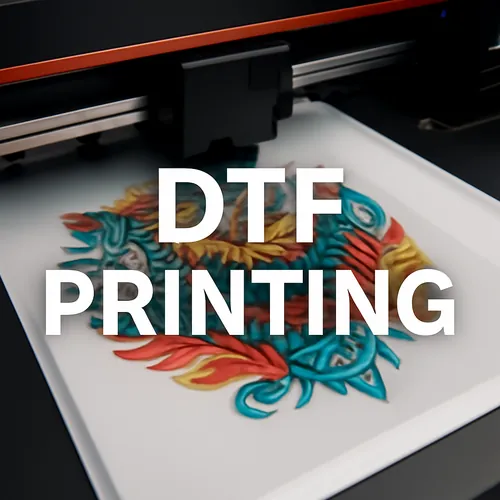
DTF printing (direct-to-film printing) is a method where a design is printed in colour plus a white layer onto a clear PET film, coated with a hot-melt adhesive powder, cured, and then heat-pressed onto fabric. It works on cotton, polyester and blends, on both dark and light colours, and it is affordable even for a single T-shirt. That is why it has become one of the most common ways to print custom apparel in India.
This guide explains what DTF is, how it works, what you need, its strengths and weaknesses, how long it lasts and how it compares to other methods. At the end we cover the big question for most readers: should you buy a DTF machine, or use a print-on-demand partner?
What does DTF stand for and why is it popular?
DTF stands for direct-to-film. Unlike direct-to-garment (DTG) printing, the ink never touches the fabric during printing. It goes onto a film first, and the film acts as a carrier that later transfers the design to the garment.
It became popular for a few simple reasons:
- One method for many fabrics. Cotton, polyester, poly-cotton, fleece, denim and more.
- No minimum quantity. There are no screens to make, so printing one design costs about the same per piece as printing fifty.
- Full colour and fine detail. Photos, gradients and small text print well.
- Works on dark garments. The white underbase keeps colours bright on black and navy T-shirts.
For Indian sellers on Instagram, Amazon, Flipkart, Meesho or Myntra who want to test many designs without holding stock, these points matter a lot.
How does DTF printing work?
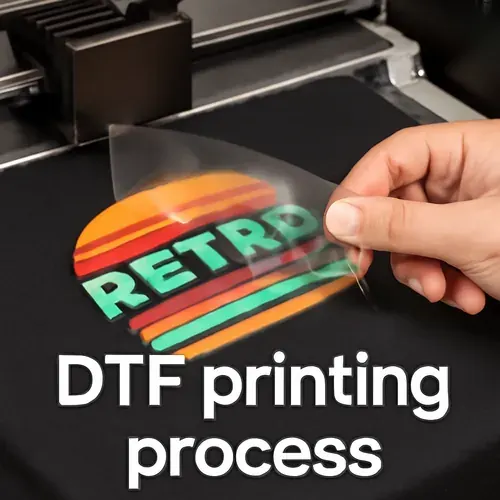
At a high level, there are five stages. Each one has its own settings and common mistakes, which we explain in detail in our step-by-step guide to the DTF printing process.
- Prepare the artwork. A high-resolution PNG with a transparent background, sized to the final print size.
- Print on PET film. The printer lays down the colour (CMYK) ink first and a white ink layer on top. The white acts as a base so colours stay bright on any garment colour. The image is printed mirrored because it will be flipped onto the fabric.
- Apply adhesive powder. While the ink is still wet, a hot-melt powder is spread over the film. It sticks only to the ink, and the excess is shaken off.
- Cure. The film is heated so the powder melts into a smooth, slightly glossy glue layer. After curing, the transfer can be stored and pressed later.
- Heat press. The transfer is placed on the garment and pressed with heat and pressure. The film is peeled off (hot or cold, depending on the film), and a short second press finishes the print.
Small studios do steps 3 and 4 by hand with a tray and a curing oven or heat press. Larger setups use a roll-to-roll printer connected to an automatic powder shaker and dryer.
What materials and equipment does DTF need?
A DTF setup has two groups of items: the machines and the consumables.
Machines and software
- A DTF printer (converted desktop A4/A3 printer or a dedicated roll-to-roll machine)
- RIP software that controls colour and the white layer
- A curing device (oven, heat press used in hover mode, or a powder shaker-dryer)
- A heat press for transferring onto garments
Consumables
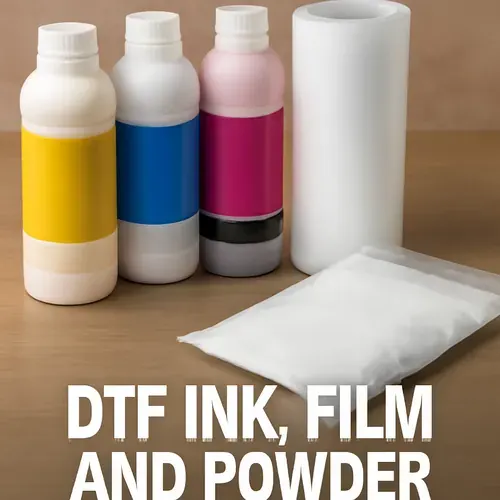
- DTF ink: water-based pigment ink in CMYK plus white
- PET film: a coated transfer film, in sheets or rolls, made for hot peel or cold peel
- Adhesive powder: usually a TPU-based hot-melt powder in fine, medium or coarse grades
The quality of these three consumables decides most of the final result. Our guide to DTF ink, film and powder explains how to choose and store each one.
What are the advantages and disadvantages of DTF?
No printing method is perfect. Here is an honest look at DTF.
Advantages
- Works on almost any fabric type and colour.
- No pretreatment of garments (DTG needs it for dark cotton).
- Low setup cost per design, so it suits small runs and print-on-demand.
- Transfers can be printed in advance and pressed later.
- Bright colours, gradients and photo-quality detail.
- Good stretch and wash resistance when cured and pressed correctly.
Disadvantages
- Large solid areas can feel slightly heavy and less breathable than screen-printed or DTG ink.
- White ink settles and can clog print heads, so machines need daily care.
- Per-piece cost is higher than screen printing once you print hundreds of the same design.
- PET film is single-use, which creates plastic waste.
- Results depend heavily on humidity, consumables and operator skill.
If you are running your own machine, most of these issues are manageable. Our list of common DTF printing problems and their fixes covers the typical ones, and these tips to improve DTF print quality help you avoid them in the first place.
How durable is DTF printing and how should you wash it?
A properly made DTF print is durable. It stretches with the fabric, does not fade quickly and resists cracking. When a print peels or cracks early, the cause is usually under-curing the powder, too little pressure or temperature, or pressing on a garment that still had moisture in it.
Simple wash care keeps prints looking new for longer. You can share these points with your customers on a care card or product listing:
- Wait about 24 hours after pressing before the first wash.
- Turn the garment inside out.
- Wash in cold or lukewarm water with a mild detergent.
- Do not use bleach.
- Avoid tumble drying on high heat; line drying in shade is best (this also matters during strong Indian summers).
- Never iron directly on the print. Iron inside out or with a cloth on top.
How does DTF compare to DTG, screen printing and sublimation?
Each method has a place. This short table gives the main differences.
| Factor | DTF | DTG | Screen printing | Sublimation |
|---|---|---|---|---|
| Fabrics | Cotton, polyester, blends, more | Best on cotton | Most fabrics | Polyester and poly-coated items only |
| Dark garments | Yes | Yes, with pretreatment | Yes | No (light colours only) |
| Minimum order | None | None | Usually bulk, due to screen setup | None |
| Colours and gradients | Full colour | Full colour | Limited by number of screens | Full colour |
| Feel | Thin layer on top of fabric | Soft, ink is in the fabric | Depends on ink | No feel, dye is inside the fibre |
| Best for | Small runs, POD, mixed fabrics | Soft-feel cotton prints | Large runs of simple designs | Sportswear, all-over polyester prints |
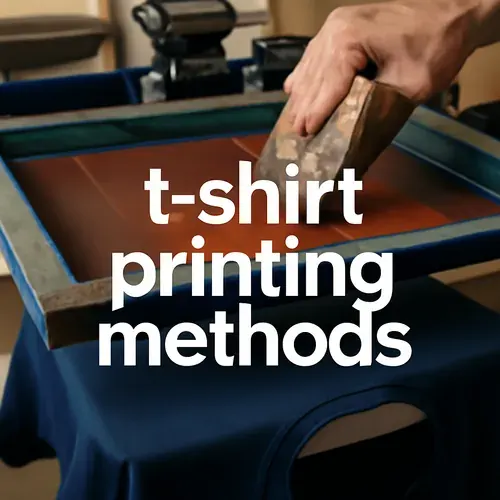
For a detailed side-by-side, read DTF vs DTG vs screen printing and DTF vs sublimation printing. If you are deciding between traditional and digital methods for your business, see screen printing vs digital printing. And if you are completely new, our beginner’s guide to T-shirt printing methods also covers vinyl, puff print and more.
What can you print with DTF?
DTF is mainly used for apparel, but the transfer can go on anything that can handle heat-press temperatures.
- T-shirts: round neck, oversized, acid washed, polo
- Hoodies, sweatshirts and zipper hoodies
- Shirts and denim
- Track pants and joggers
- Caps, tote bags, aprons and some shoes
For Indian brands, DTF on oversize T-shirts and hoodies is especially common because streetwear designs often use large, full-colour artwork that would need many screens in screen printing.
Should you buy a DTF machine or use a print-on-demand partner?
This is the most practical question for most readers. Both paths are valid; the right answer depends on your volume, money and time.
When buying a machine makes sense
- You already have steady daily orders, or a local market (schools, events, corporate) that keeps a machine busy.
- You have space with power backup and some control over humidity.
- You or a staff member can learn RIP software, colour settings and daily head maintenance.
- You can manage stock of ink, film, powder and blank garments.
A machine is only one part of the cost. You also need a curing setup, heat press, RIP software, consumables, blanks, electricity and spare parts. Before you buy, read our buying guide to DTF printers in India, compare other printing machines for small businesses, and go through the full cost breakdown to launch a DTF printing business in India.
When a print-on-demand partner makes more sense
- You are testing designs and do not know which ones will sell.
- You want to sell online without holding stock.
- Your orders come in ones and twos from many places across India.
- You would rather spend your time on design and marketing than on machine care.
With print-on-demand, you pay only when an order comes in. There is no machine to repair, no ink drying in the heads during a slow month, and no unsold stock after a festival season.
How PrintzyHub helps
PrintzyHub is a print-on-demand and dropshipping partner that uses DTF printing for apparel. You sign up free on the PrintzyHub app, pick a product, upload your artwork and preview it. You can sell on your own store or on Amazon, Flipkart, Meesho or Myntra, and PrintzyHub prints, packs and ships each order under your brand.
- No minimum order: one T-shirt or a bulk order.
- Many blanks: oversize T-shirts in 180 GSM and 240 GSM cotton, acid washed styles, round neck, polos, shirts, sweatshirts, hoodies, track pants and more.
- Quality control on every order, plus options for custom labels and packaging.
- Same-day dispatch, and COD for sellers registered as vendors on the PrintzyHub app.
- Support on WhatsApp and email in Tamil, English and Hindi.
You can see current base prices on our catalog and pricing page, and if you want to check the DTF print, fabric and packing yourself first, order a sample before going bulk.
Conclusion
DTF printing is a flexible, full-colour method that works on almost any fabric and has no minimum order, which makes it a natural fit for small brands and print-on-demand. Its main demands are good consumables, correct curing and pressing, and regular machine care. If you have steady volume, owning a setup can work well. If you are starting out or testing designs, letting a DTF print-on-demand partner handle the printing is usually the faster and lower-risk path.
Next step: create a free PrintzyHub account, upload your first design and order a sample to see DTF quality in your hands.
Frequently asked questions
Is DTF printing good quality?
Yes. When the artwork is high resolution and the transfer is cured and pressed correctly, DTF gives sharp detail, smooth gradients and bright colours on both dark and light fabrics. Most quality problems come from low-resolution files, poor consumables or wrong press settings, not from the method itself.
How long does a DTF print last on a T-shirt?
A well-made DTF print usually lasts as long as the T-shirt itself if it is washed inside out in cold or lukewarm water and not ironed directly. Cracking or peeling early is almost always a sign of under-curing, low pressure or a poor-quality adhesive powder.
Can DTF be printed on 100% cotton?
Yes. DTF works on 100% cotton, polyester, blends, fleece and denim. This is one of its biggest advantages over sublimation, which only works well on polyester, and over DTG, which needs pretreatment on cotton for dark colours.
Does a DTF print feel heavy or plastic?
A small or medium design feels light and soft, but a very large solid block of colour can feel slightly rubbery and less breathable. Designers reduce this by using open shapes, distressed textures or knock-outs instead of one big filled rectangle.
Do I need to buy a DTF printer to sell printed T-shirts in India?
No. You can use a print-on-demand partner that already runs DTF machines. You upload the design, the partner prints and ships each order, and you avoid the cost of a printer, powder shaker, heat press, consumables and maintenance.