DTF vs Sublimation Printing: Differences, Fabrics and Best Uses
Part of our guide: What Is DTF Printing? A Complete Beginner's Guide for India
DTF prints on almost any fabric and any garment colour, including black cotton T-shirts, while sublimation only works on polyester (or high-polyester) items in white or light colours. In return, sublimation gives a print with zero feel that can cover the whole garment, edge to edge. So if you sell cotton or dark T-shirts, choose DTF; if you sell light polyester sportswear or all-over prints, sublimation is often the better fit.
New to DTF? Our beginner’s guide to DTF printing explains the basics before you compare.
How do DTF and sublimation work?
How DTF works
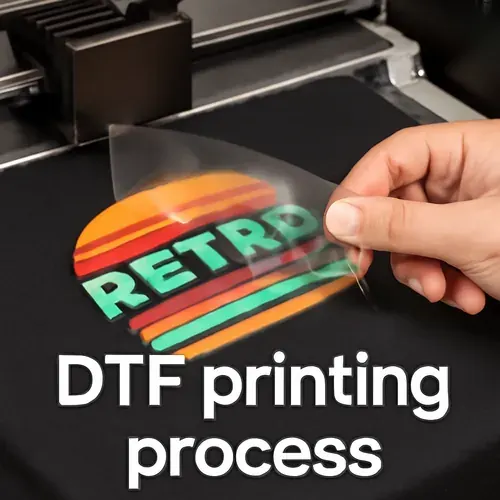
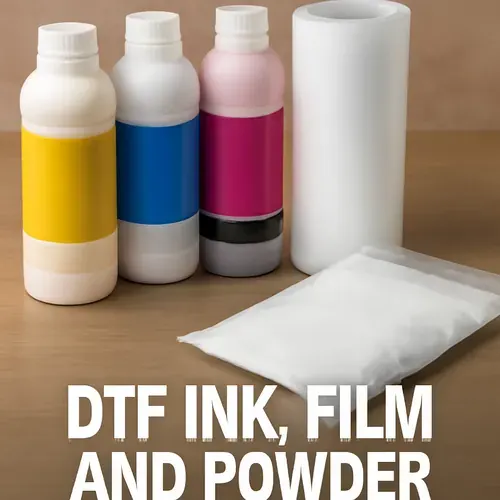
DTF prints your design onto a PET film with colour inks and a white ink layer. Adhesive powder is added, cured, and then the film is heat-pressed onto the garment. The design sits on the surface of the fabric as a thin, flexible layer. You can follow each stage in our DTF printing process step by step.
How sublimation works
Sublimation prints the design in mirror image on special sublimation paper using sublimation ink. Under high heat and pressure, the ink turns into a gas and bonds with polyester fibres, then becomes solid again inside the fabric. There is no layer on top; the colour becomes part of the fabric itself.
That one difference, “on top of the fabric” versus “inside the fibre”, explains almost every pro and con below.
DTF vs sublimation: comparison table
| Factor | DTF | Sublimation |
|---|---|---|
| Fabrics | Cotton, polyester, blends and more | Polyester or high-polyester only |
| Garment colours | Any, including black | White or light colours only |
| White in the design | Yes, printed with white ink | No white ink; white areas show the fabric colour |
| Feel | Thin, smooth layer you can slightly feel | No feel at all |
| Breathability | Good for normal prints, less on big solid blocks | Fabric stays fully breathable |
| All-over / edge-to-edge prints | Not practical | Yes, a key strength |
| Durability | Good; can wear if poorly pressed | Very good; no cracking or peeling |
| Hard items (mugs, tiles, keychains) | Limited | Yes, on polymer-coated blanks |
| Typical use | Cotton T-shirts, hoodies, dark garments, mixed fabrics | Jerseys, dri-fit tees, polyester polos, mugs, gifts |
What fabrics and colours can you use?
This is the biggest deciding factor, so it is worth repeating clearly.
- Sublimation needs polyester. The more polyester in the fabric, the brighter and longer-lasting the print. On cotton the dye has nothing to bond with.
- Sublimation needs light colours. The ink is see-through, so it shows true colour only on white or pale fabric. On a red T-shirt, for example, a blue design turns dark.
- DTF does not care much about either. The white base layer covers the fabric colour, and the adhesive bonds to cotton, polyester and blends.
In India, most streetwear and everyday T-shirts sold on Instagram, Meesho or Myntra are cotton, and black and dark colours sell very well. That is why many cotton-based brands choose DTF. Sublimation shines in sportswear, school and college jerseys, corporate dri-fit T-shirts and gift items.
How do they feel and last?
Feel. Sublimation wins. Because the ink lives inside the fibre, you cannot feel the print at all, which matters for sportswear worn in hot weather. DTF is soft and flexible, but large solid areas feel like a light layer.
Wash life. Both can last a long time when done right. Sublimation does not crack or peel at all. DTF holds well through regular washing if it was cured and pressed at the correct time, temperature and pressure. Poor pressing shows up as peeling edges.
Fading. Sublimation can fade slowly under strong sunlight over a long period. DTF can wear on heavy-friction areas. For both, washing inside out helps.
Which should you choose? (by use case)
| What you want to make | Choose | Reason |
|---|---|---|
| Black or dark cotton T-shirts with bright artwork | DTF | Sublimation cannot print on dark or cotton |
| Oversize cotton streetwear brand | DTF | Works on heavy cotton blanks |
| Cricket, football or kabaddi team jerseys (light base) | Sublimation | All-over colour, breathable, zero feel |
| Names and numbers on ready-made dark jerseys | DTF | Works on any colour |
| Light-coloured polyester polo for a corporate event | Either | Sublimation for zero feel; DTF if you need white in the logo |
| Mugs, photo frames, keychains | Sublimation | Works on coated hard items |
| Mixed catalogue (cotton tees, hoodies, polos) | DTF | One method for all fabrics |
A quick test: if the answer to “Is it white or light polyester?” is no, choose DTF. If it is yes, sublimation is a strong option, especially for all-over designs.
Comparing more than two methods? See DTF vs DTG vs screen printing or the overview of all types of T-shirt printing methods.
What about setup cost?
A sublimation setup is usually simpler: a sublimation printer, sublimation paper and ink, and a heat press (plus a mug press for mugs). A DTF setup adds PET film, adhesive powder and a curing step, and larger DTF setups use a powder shaker and dryer. Exact prices vary a lot by brand and size, so ask several Indian suppliers for current quotes.
The bigger cost question is what you can sell. A sublimation-only setup cannot serve customers who want cotton or black T-shirts, which is a large part of the Indian market.
How PrintzyHub helps
PrintzyHub prints with DTF, so you can sell cotton, polyester and dark garments without buying any machine. There is no minimum order: one piece or bulk.
If you like the feel of polyester, our Polyester Polo T-shirt is quick-dry and a good blank for sports and corporate wear. PrintzyHub prints only with DTF, so your design goes on it the same way as on our cotton range. For cotton, look at the Round Neck T-shirt or Cotton Polo. Current base prices are on our pricing page.
Conclusion
DTF and sublimation are not rivals so much as tools for different jobs. Sublimation is unbeatable for zero-feel, all-over prints on light polyester. DTF is the all-rounder for cotton, dark colours and mixed product ranges, which is what most Indian T-shirt brands sell.
Next step: sign up free on the PrintzyHub app, upload a design, and order one sample to see the print on your chosen fabric.
Frequently asked questions
Can you do sublimation printing on a cotton T-shirt?
Not properly. Sublimation dye bonds with polyester fibres, so on 100% cotton the print looks faded and washes out quickly. For cotton T-shirts, DTF is the better option.
Can sublimation print on a black T-shirt?
No. Sublimation ink is transparent and there is no white ink, so it only shows clearly on white or light-coloured polyester. For black or dark garments, use DTF.
Does sublimation printing fade or crack?
Sublimation prints on polyester do not crack or peel because the dye becomes part of the fibre. They can fade slowly with strong sunlight or very hot ironing, but in normal washing they last a long time.
What is the best printing method for sports jerseys in India?
For full-colour jerseys on white or light polyester, sublimation is the usual choice because it can cover the whole garment and stays breathable. For dark jerseys, or names and numbers on ready-made jerseys, DTF works well.
Is DTF or sublimation cheaper to start?
A basic sublimation setup is usually cheaper to start than a DTF setup, because it needs a sublimation printer, paper and a heat press, while DTF also needs film, adhesive powder and a curing step. But sublimation limits you to polyester and light colours, so compare what you plan to sell, not just the starting cost.