DTF vs DTG vs Screen Printing: Which Is Best for Custom T-Shirts?
Part of our guide: What Is DTF Printing? A Complete Beginner's Guide for India
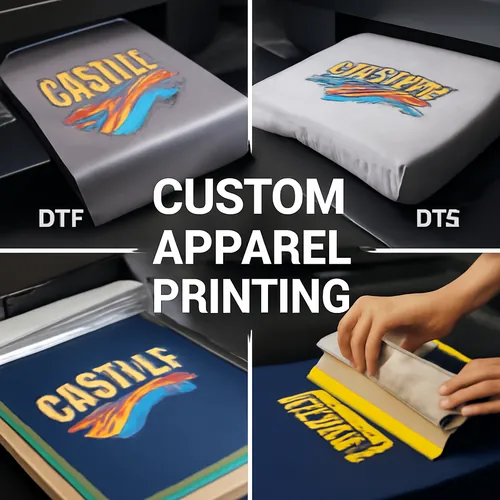
DTF is the most flexible choice for small orders on almost any fabric and colour, DTG gives the softest feel for detailed art on light cotton, and screen printing is the cheapest per piece for large orders of simple designs. The right pick depends on three things: your fabric, the number of colours in your design, and how many pieces you need. This guide compares all three side by side and tells you which one to choose for each situation.
If you are completely new to film transfers, start with our complete beginner’s guide to DTF printing and come back here for the comparison.
How does each method work?
DTF (direct-to-film)
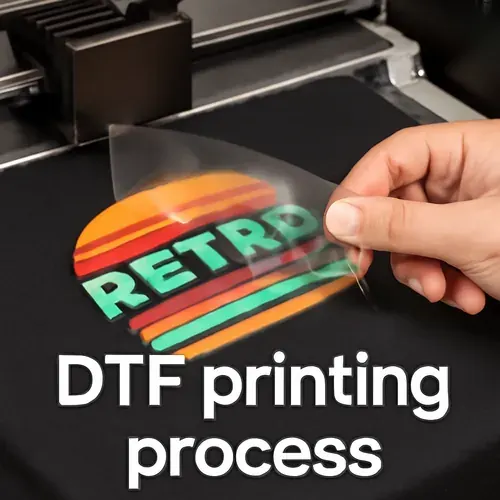
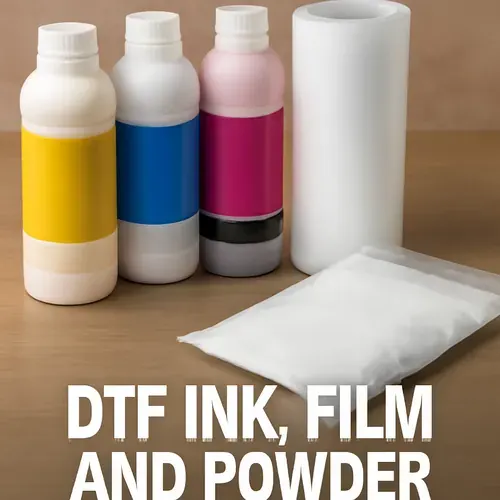
The design is printed with CMYK and white ink onto a PET film. Hot-melt adhesive powder is applied to the wet ink, the film is cured, and then a heat press transfers the design onto the garment. Because the white layer and glue do the work, DTF sticks to cotton, polyester and blends, light or dark. Our step-by-step DTF printing process guide covers each stage in detail.
DTG (direct-to-garment)
A DTG printer works like a large inkjet printer for fabric. It sprays water-based ink straight into the T-shirt. Dark garments need a pretreatment spray and a white ink base first, then the print is heat-cured.
Screen printing
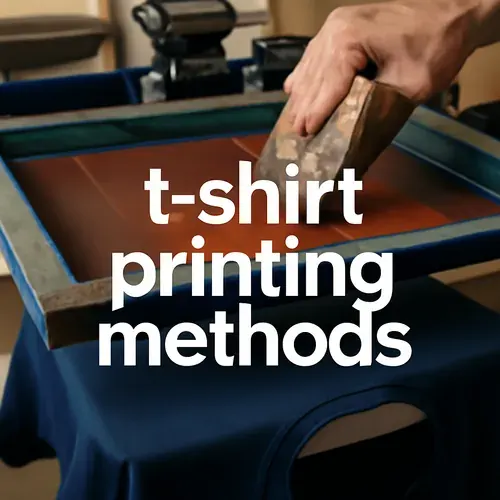
A separate mesh screen is made for each colour in the design. Ink is pushed through the screen onto the garment with a squeegee, one colour at a time, and then cured with heat. The setup takes time, but once screens are ready, each extra piece is fast and cheap.
DTF vs DTG vs screen printing: comparison table
| Factor | DTF | DTG | Screen printing |
|---|---|---|---|
| Best fabrics | Cotton, polyester, blends, many others | High-cotton fabrics | Cotton, blends, many others (ink choice matters) |
| Dark garments | Yes, white ink layer built in | Yes, but needs pretreatment | Yes, with a white underbase |
| Photos and gradients | Very good | Very good | Hard; needs halftones and skill |
| Number of colours | Unlimited, same cost | Unlimited, same cost | Each colour adds a screen and cost |
| Setup per design | Very low | Very low | High (screens, film, alignment) |
| Ideal order size | 1 to a few hundred | 1 to small runs | Large runs of the same design |
| Feel on fabric | Thin, smooth layer | Softest, ink in fabric | Soft (water-based) to thicker (plastisol) |
| Wash durability | Good to very good | Good, may fade slowly | Very good |
| Stretch | Good, flexible film | Good | Good with the right ink |
| Speed for one piece | Fast | Fast | Slow (setup) |
| Speed for 500 pieces | Moderate | Slow | Fast |
These are general patterns. Real results depend on the machine, ink, film, curing and the person running it.
Where does each method win?
DTF strengths and limits
- Works on the widest range of fabrics, so one setup covers T-shirts, hoodies, polos and bags.
- Bright colours on black and other dark garments without pretreatment.
- Prints can be made in advance and pressed later, which suits on-demand orders.
- Limit: large solid blocks of colour feel like a layer on the fabric and breathe less.
DTG strengths and limits
- Very soft hand feel and fine detail on light cotton.
- No film or powder; the print is part of the T-shirt surface.
- Limits: pretreatment adds a step for dark garments, it is weaker on polyester, and printers need regular use and maintenance to avoid head clogs.
Screen printing strengths and limits
- Lowest cost per piece once you pass a certain quantity.
- Strong, solid colours and special inks (puff, glitter, metallic).
- Limits: every colour needs its own screen, so multi-colour designs in small numbers get expensive, and changing a design means new screens.
For a closer look at the money side, such as setup cost and order size, read screen printing vs digital printing for your business.
Which should you choose? (by use case)
| Your situation | Best fit | Why |
|---|---|---|
| Instagram or marketplace brand selling many designs, few pieces each | DTF | No setup per design, works on all colours |
| Single gift or sample T-shirt | DTF or DTG | No screens needed |
| Photo print on a white cotton T-shirt, softest feel wanted | DTG | Ink sits in the fabric |
| 300 identical event T-shirts with a 1–2 colour logo | Screen printing | Lowest per-piece cost at volume |
| College fest or corporate order with a full-colour design | DTF (smaller runs) or screen (very large runs) | Depends on quantity and colours |
| Polyester sports jersey or quick-dry polo | DTF (or sublimation for light colours) | DTG struggles on polyester |
| Dark oversize T-shirts with bright artwork | DTF | Strong white base on dark fabric |
A simple rule: if the design changes often or the quantity is small, go digital (DTF or DTG). If the same simple design is printed in large numbers, screen printing usually wins. Between DTF and DTG, pick DTF when fabric or garment colour varies, and DTG when you mainly print light cotton and want the softest finish.
If you are also thinking about all-over prints on polyester, see our separate guide on DTF vs sublimation printing.
What about cost?
We are not quoting machine prices here because they change often and vary by brand and dealer. Think about cost in two parts:
- Setup cost per design – near zero for DTF and DTG, real money and time for screen printing (screens, emulsion, exposure, alignment).
- Running cost per piece – ink, film and powder for DTF; ink and pretreatment for DTG; ink and labour for screen printing.
Screen printing spreads its setup cost across the order, so it gets cheaper as quantity grows. Digital methods cost about the same for the first piece and the hundredth. If you plan to buy equipment, our list of DTF printers in India from budget to premium helps you compare machine types.
How PrintzyHub fits in
PrintzyHub prints with DTF, so you get the benefits listed above (any garment colour, many fabrics, full-colour designs) without buying a printer, heat press or consumables. There is no minimum order, so you can order a single T-shirt or bulk. You upload your design in the PrintzyHub app, sell on your own store or on Amazon, Flipkart, Meesho or Myntra, and we print, pack and ship under your brand.
Browse blanks like the oversize T-shirt in 180 and 240 GSM cotton and see current base prices on our pricing and catalog page.
Conclusion
There is no single best method. DTF is the most flexible for small runs on any fabric, DTG is softest on light cotton, and screen printing is cheapest for big runs of simple designs. Match the method to your fabric, colours and quantity, and you will rarely go wrong.
Next step: want to see DTF quality for yourself? Order a single sample to check the fabric, fit and print before you go bulk.
Frequently asked questions
Which lasts longer, DTF or DTG?
Both last well when made and cured properly. DTF prints usually hold up a little better on frequent washing because the design sits on a flexible adhesive layer, while DTG ink soaks into cotton fibres and can fade slowly over many washes. Washing inside out in cold water helps both.
Can DTG print on polyester T-shirts?
Standard DTG inks are made for cotton and work best on high-cotton fabric. Results on polyester and many blends are weaker or need special pretreatment. If your garment is polyester or a blend, DTF or sublimation is usually the safer choice.
Is screen printing better quality than DTF?
Not better, just different. Screen printing gives very bold, solid colours and a long life, which is great for simple logos in bulk. DTF handles photos, gradients and many colours more easily and needs no screens, so for small runs and detailed art it is often the better pick.
Which printing method feels softest on the T-shirt?
DTG usually feels softest on light cotton T-shirts because the ink goes into the fabric. Water-based screen printing can also feel very soft. DTF has a thin, smooth layer you can feel slightly, especially on large solid areas.
What is the cheapest way to print one custom T-shirt?
For a single piece, DTF or DTG is cheaper than screen printing because there are no screens to make. If you do not want to buy any machine, a print-on-demand partner prints one piece at a time for you.