Screen Printing vs Digital Printing: Which Suits Your Business?
Part of our guide: What Is DTF Printing? A Complete Beginner's Guide for India
Screen printing is better for large orders of the same simple design, and digital printing (DTF or DTG) is better for small orders, many different designs and full-colour artwork. The deciding numbers are order size, number of colours and how fast you need the goods. This post looks at the choice purely as a business decision, so you can work out which method makes money for your type of orders.
For a technical comparison of print quality, fabric and feel, read DTF vs DTG vs screen printing compared. Here, the focus is cost, quantity and time.
What counts as “digital printing” for T-shirts?
Digital printing means the design goes straight from a computer file to the printer, with no screens. For apparel, that mainly means:
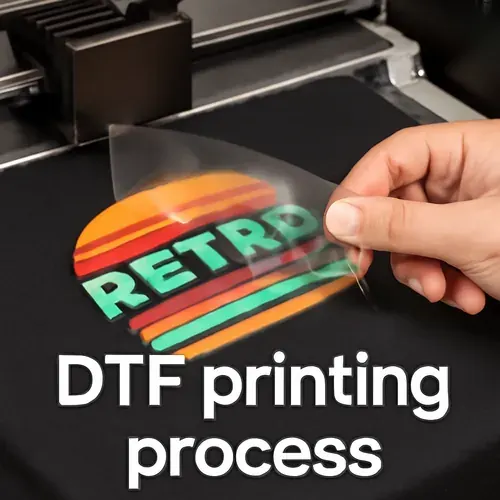
- DTF (direct-to-film): print on film, then heat-press onto the garment. Works on most fabrics and colours. See our DTF beginner’s guide.
- DTG (direct-to-garment): print directly into cotton fabric.
- Sublimation: dye printed into light polyester.
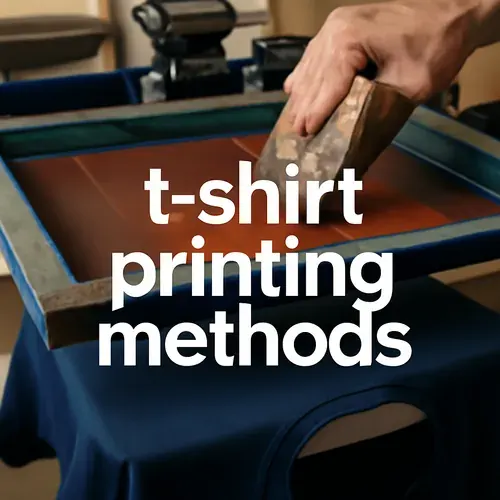
Screen printing, by contrast, needs a physical screen made for every colour before the first print.
Screen printing vs digital printing: business comparison
| Business factor | Screen printing | Digital printing (DTF/DTG) |
|---|---|---|
| Setup cost per design | High: one screen per colour, plus labour | Very low: just the file |
| Cost per piece on small orders | High | Low to moderate |
| Cost per piece on large orders | Lowest | Stays about the same |
| Effect of more colours | Each colour adds cost and time | No extra cost |
| Photos and gradients | Difficult | Easy |
| Turnaround for 1–50 pieces | Slow (setup first) | Fast |
| Turnaround for 500+ pieces | Fast once set up | Slower per piece |
| Design changes | New screens needed | Change the file |
| Personalisation (names, numbers) | Not practical | Easy |
| Risk of unsold stock | Higher (you print in bulk) | Low (print what you sell) |
| Skill needed | High: screens, registration, curing | Moderate: files, settings, pressing |
How does order size change the answer?
Order size is the single biggest factor.
Screen printing cost has two parts: a fixed setup cost (screens, film positives, exposure, alignment, cleaning) and a small cost for each print. On a 20-piece order, the setup is split 20 ways. On a 1,000-piece order, it is split 1,000 ways and almost disappears.
Digital printing cost is mostly per piece: ink, film, powder (for DTF), power and labour. The 1st print and the 500th cost about the same.
So there is always a break-even quantity. Below it, digital is cheaper. Above it, screen printing is cheaper.
How to find your break-even quantity
- Get the screen printing setup cost for your design (S).
- Get the screen printing cost per piece after setup (s).
- Get the digital printing cost per piece (d).
- Break-even quantity = S ÷ (d − s).
Example with made-up numbers, only to show the method: if setup is ₹3,000, screen cost per piece is ₹30 and digital cost per piece is ₹90, then 3,000 ÷ (90 − 30) = 50 pieces. Below 50 pieces, digital is cheaper; above 50, screen printing is cheaper. Use real quotes from your own suppliers; your numbers will be different.
How does the number of colours change the answer?
In screen printing, every colour is a new screen and a new step. A one-colour logo is cheap and quick. A six-colour design costs much more to set up and carries more risk of misalignment. Photo-like artwork needs halftones and skilled work.
In digital printing, one colour and fifty colours cost the same. This is why brands that sell detailed, colourful designs on Instagram or marketplaces lean towards digital.
Rule of thumb: the more colours and the fewer pieces, the stronger the case for digital.
What about turnaround time?
- Small, urgent orders (a birthday, a team of 15, a shop sample): digital wins because printing can start right away.
- Large planned orders (a college fest, a marathon, a company event): screen printing is very fast once screens are ready, so for hundreds of identical pieces it can finish sooner.
- Festival rush (Diwali, Pongal, Onam, New Year): if you sell many designs in small numbers, digital lets you respond to demand without bulk stock.
Which should you choose? (by business type)
| Business type | Better fit | Why |
|---|---|---|
| Instagram brand launching 20 designs | Digital (DTF) | No setup per design, low stock risk |
| Marketplace seller on Amazon, Flipkart, Meesho or Myntra | Digital (DTF) via print-on-demand | Print only what sells |
| Corporate order: 1,000 T-shirts, 1-colour logo | Screen printing | Lowest cost per piece |
| School or college event: 300 pieces, 2 colours | Screen printing (check break-even) | Usually above break-even |
| Custom gifts and personalised names | Digital | Every piece can be different |
| Print shop serving all customers | Both, or digital + outsourced screen | Covers small and bulk jobs |
What about investment and risk?
Screen printing needs space for screens, washout and drying, plus skill that takes time to learn. Digital setups need a printer and heat press and carry ongoing costs like ink and maintenance. Both involve money upfront. To compare machine types, see our guide to top printing machines for small businesses in India.
The other big risk is stock. Screen printing pushes you to print in bulk, so unsold sizes and designs become dead stock. Digital printing on demand lets you print after the customer orders.
How PrintzyHub helps
If you want the digital model without the machine investment, PrintzyHub prints with DTF on demand. There is no minimum order, you can sell on your own store or on Indian marketplaces, and we print, pack and ship each order under your brand. For larger quantities, we also handle bulk customised T-shirts for events, corporate orders and retail shops.
Check current base prices on our pricing page, then use the profit calculator to plan your margin.
Conclusion
Do not choose a method by habit. Look at your typical order size, number of colours and deadline, calculate your break-even quantity, and pick the method that makes money for the orders you actually get. For most new brands with many designs and small quantities, digital printing is the safer start.
Next step: create a free PrintzyHub account and test your first designs without buying stock.
Frequently asked questions
What is the minimum order for screen printing?
There is no fixed rule, but most screen printers set a minimum because each colour needs its own screen. Small orders are possible, but the setup cost is shared by fewer pieces, so the price per T-shirt goes up a lot.
Is digital printing more expensive than screen printing?
Per piece, digital printing can cost more on large orders of the same design. On small orders, many designs or full-colour artwork, digital is usually cheaper because there is no screen setup.
Which printing method is fastest for urgent orders?
For small urgent orders, digital printing is faster because it can start as soon as the file is ready. For a very large order, screen printing can be faster once the screens are made, because each print takes only seconds.
Can I offer both screen and digital printing in my business?
Yes. Many print shops use screen printing for bulk event and corporate orders and digital methods like DTF for small runs, samples and full-colour designs. You can also outsource one side to a partner instead of buying both setups.
Is DTF considered digital printing?
Yes. DTF, DTG and sublimation are all digital printing methods because the design is printed straight from a computer file, with no screens or plates.