Top T-Shirt Printing Machines for Small Businesses in India
Part of our guide: What Is DTF Printing? A Complete Beginner's Guide for India
For a small T-shirt business in India, the core machine is a heat press, and the second machine depends on what you sell: a DTF printer for full-colour prints on any fabric, a sublimation printer for light polyester, a vinyl cutter for names and numbers, a DTG printer for soft prints on light cotton, or a screen printing setup for bulk orders. If you are not ready to invest, a print-on-demand partner lets you sell printed T-shirts with no machines at all. This guide explains each machine type and who it suits.
We do not list brand models or prices here because they change often and depend on the dealer. Use this guide to decide which type of machine you need, then compare current quotes from several Indian suppliers.
What should you decide before buying any machine?
- Products: cotton T-shirts, polyester jerseys, hoodies, mugs or all of them?
- Designs: full-colour artwork, or simple text and logos?
- Volume: a few pieces a day, or hundreds of the same design?
- Space and power: a room at home or a small unit? Is your electricity supply stable?
- Service: is there a technician and spare parts available near you, not only in Delhi, Mumbai, Surat or Tiruppur?
- Skill and time: who will run the machines, and who will handle design, orders and shipping?
Answering these first stops you from buying a machine that does not match your orders.
Machine-by-machine buying guide
1. Heat press machine
Used to transfer DTF film, sublimation prints and vinyl onto the garment. DTF, sublimation and vinyl all depend on it, and many DTG shops also use one to cure prints and pretreatment.
- Types: clamshell (compact), swing-away (better access, more even pressing), and pneumatic or auto-open presses for higher volume. Separate mug, cap and small-label presses exist for other products.
- What to check: even heat across the plate, accurate temperature and timer, plate size for oversize prints, and build quality.
- Who it suits: everyone starting out. Even if you buy ready-made transfers, you need a press.
2. DTF printer (plus powder shaker and dryer)
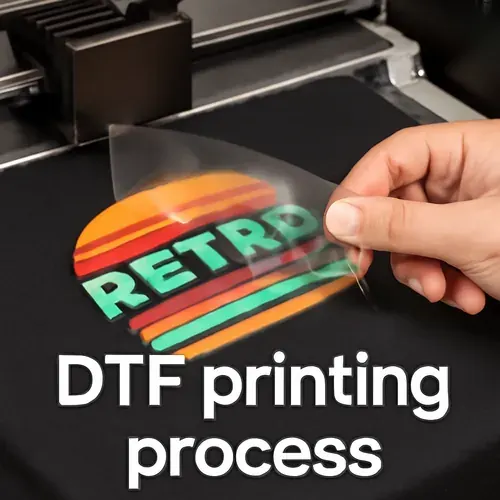
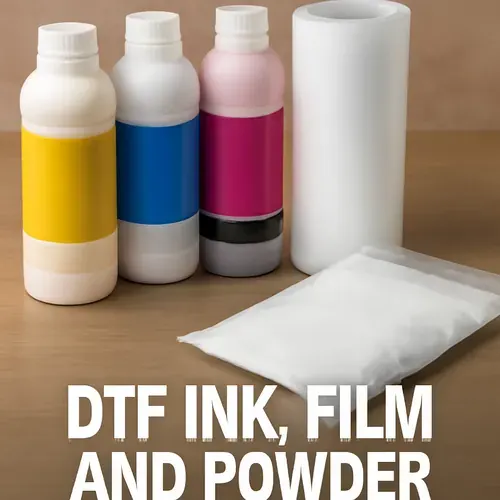
Prints your design on PET film with colour and white ink. The film is then coated with adhesive powder and cured. If DTF is new to you, our beginner’s guide to DTF printing explains how it works.
- Types: small A3-size desktop printers for low volume, and wider roll-fed printers that usually pair with an automatic powder shaker and dryer for higher output.
- What to check: printhead type and replacement cost, white ink circulation (to reduce clogging), RIP software included, local service, and ink and film availability.
- Who it suits: brands printing many different full-colour designs on cotton, dark garments and mixed fabrics. Our guide to the best DTF printers in India from budget to premium goes into this category in detail.
3. DTG printer
Prints directly into the fabric, giving a very soft feel.
- What to check: pretreatment needs for dark T-shirts, maintenance routine, ink cost and local support.
- Who it suits: businesses that mainly print detailed designs on light cotton and want the softest finish. Less suitable if you print a lot of polyester or want low maintenance.
4. Sublimation printer
Prints with sublimation ink on special paper, which is then heat-pressed into polyester.
- What to check: ink and paper availability, print width you need, and a matching press (flat press for garments, mug press for mugs).
- Who it suits: sportswear, team jerseys, corporate dri-fit T-shirts and gift items like mugs and keychains. Not for cotton or dark garments. See DTF vs sublimation if you are torn between the two.
5. Vinyl cutter (plotter)
Cuts designs out of heat transfer vinyl sheets, which you then weed and press.
- What to check: cutting width, software compatibility and contour-cutting support if you want printable vinyl.
- Who it suits: names, numbers, short text, simple logos and personalised one-off pieces. A low-cost add-on to a heat press.
6. Screen printing setup
Not one machine but a set: screens and frames, emulsion, an exposure unit, a printing press (manual carousel to start), squeegees, a washout area and a dryer (flash dryer or conveyor) to cure ink.
- What to check: number of colour stations, space for washing and drying screens, and access to skilled printers.
- Who it suits: businesses with regular bulk orders of the same design, such as schools, events and corporate clients.
Which machine suits which business?
| Machine | Main use | Best for | Not ideal for |
|---|---|---|---|
| Heat press | Applying transfers | Everyone | Use alone only with ready-made transfers |
| DTF printer + shaker/dryer | Full-colour film transfers | Cotton, dark T-shirts, many designs, small runs | Very large runs of one simple design |
| DTG printer | Direct prints on cotton | Soft, detailed prints on light cotton | Polyester, low-maintenance needs |
| Sublimation printer | Dye prints on polyester | Jerseys, dri-fit, mugs, gifts | Cotton, dark garments |
| Vinyl cutter | Cut text and shapes | Names, numbers, simple logos | Photos, detailed art |
| Screen printing setup | Bulk ink printing | Large orders, 1–4 colours | Small orders, photo designs |
What costs come after you buy the machine?
The machine price is only the start. Plan for:
- Consumables: ink, film, powder, paper, vinyl, emulsion.
- Maintenance: printhead cleaning, replacement parts, service visits.
- Power: heat presses and dryers use a lot of electricity.
- Space and labour: someone has to print, press, check quality and pack.
- Blank T-shirts: stock in every size and colour you sell.
For a full list of these costs for a DTF setup, read our DTF printing business cost breakdown for India.
Should you buy machines or use a print-on-demand partner?
| Question | Buy machines | Print-on-demand partner |
|---|---|---|
| Upfront investment | Machines, space, stock | None for equipment |
| Control | Full control of production | Partner handles production |
| Per-piece cost at high volume | Can be lower once busy | Fixed base price per piece |
| Risk if sales are slow | Machines sit idle, stock unsold | Pay only when you have orders |
| Your time | Printing, pressing, packing | Design, marketing, customers |
| Product range | Limited to what your machines handle | Partner’s full catalogue |
Buy machines when you have steady daily orders, space, staff and cash, and want full control. Use print-on-demand when you are testing designs, building a brand, or selling on marketplaces and want to avoid idle machines and dead stock. Many sellers start with print-on-demand and buy machines later. See how to start a print-on-demand business in India and our list of low-investment printing business ideas in India.
How PrintzyHub helps
PrintzyHub is a print-on-demand and dropshipping partner that prints with DTF. You do not need any of the machines above. There is no minimum order, every order goes through quality control, and we pack and ship under your brand to customers who buy from your store or from Amazon, Flipkart, Meesho or Myntra. Browse the products and current base prices on our catalog page.
Conclusion
Start with the products you want to sell, then pick the machine type that fits: heat press first, then DTF, sublimation, vinyl, DTG or screen depending on your fabric, designs and volume. And if buying machines does not make sense yet, start without them and invest once your sales prove the demand.
Next step: order a sample to see PrintzyHub’s DTF print quality before you decide whether to buy your own machines.
Frequently asked questions
Which T-shirt printing machine is best to start a small business in India?
It depends on what you will sell. A heat press is needed for almost every method, so it is usually the first machine. Add a DTF printer for full-colour prints on cotton and dark T-shirts, a sublimation printer for light polyester and mugs, or a vinyl cutter for names and numbers.
Can I start a T-shirt printing business with only a heat press?
Yes. With a heat press alone you can apply ready-made DTF transfers bought from a transfer supplier, or vinyl designs cut by someone else. This keeps your start-up cost low while you test demand.
Do T-shirt printing machines need a lot of electricity?
Heat presses, curing ovens and dryers draw a lot of power while heating, so check your connection load and wiring before installing. Ask the seller for the power rating of each machine and plan for a stable supply or backup, as power cuts can spoil prints mid-cycle.
Should I buy a new or second-hand DTF printer?
A used printer can save money, but printheads are a wear part and can be costly to replace. If you buy second-hand, test print in person, ask about printhead age and check that the seller or a local technician can provide service and spare parts.
What machines do I need for a print-on-demand business?
None, if you work with a print-on-demand partner. The partner owns the printers and presses, prints each order and ships it. You focus on designs, your store and marketing.